Image
Blog
It was late in the evening in December and I was sitting at my desk crying. I don’t mean dainty tears, I mean ugly crying. Why? Because the ongoing impact of Covid-19 had exhausted all my mentoring tools (not to mention exhausted me!) and, as a result, I worried that I was failing mentees in crisis in my role as DGS. I simply did not know what to do, and that lack of knowing felt awful.
Over time, as I compared notes with other faculty mentors, I realized that my experience was far from unique. This realization led me to undertake a productive collaboration with Duke Graduate School last year as its inaugural Graduate Faculty Fellow.
When I sat down with Dean Suzanne Barbour to discuss my areas of interest for the fellowship, we immediately agreed that a primary focus would be on creating high-quality mentor training for faculty across disciplines. This is already a priority of The Graduate School, but my experience as a faculty member from the humanities has shown me that our distinctly different graduate environments — and the different mentoring needs created by those environments — are often overlooked locally and, more importantly, nationally. We usually don’t even have a seat at the table where these things are being discussed.
Why are humanists so invisible when it comes to the mentoring conversation? One reason is our size: Ph.D. cohort sizes in humanities programs tend to be between two to five students annually. With only ten or so humanities graduate programs at Duke, for example, this means that our students make up less than 10% of Duke’s Ph.D. student population in any given year. We’re easy to miss.
This also has a larger impact. Most studies of best practices in mentoring focus on lab-based environments in STEM fields, which tend to have significantly larger cohort sizes. This makes sense: everyone knows that for scientific studies, you need a large enough sample size for results to be valid. In most places, the size of today’s humanities graduate programs is simply not statistically significant, individually or collectively.
There also isn’t much funding to study mentoring in the humanities. Traditionally the NSF and the NIH have awarded training grants to universities that would require a mentoring component. Separate NSF initiatives made awards specifically for mentoring programs, particularly in terms of equity of access to graduate education. Private foundations, such as the Sloan Foundation, have also contributed significant funding to the development and deployment of high-quality mentoring programs in STEM fields. But on the humanities side, the NEH’s budget is so small that it does not fund student training at all, including mentoring initiatives. What the NSF traditionally has spent on undergraduate research alone (including the mentoring needed to do that research) eclipses the entire NEH budget.
When it comes to mentoring best practices, humanities programs have not been studied nor have humanities programs had access to the sort of grants that could fund both studies of mentoring and the development of robust mentoring centers and programs.
Why does this matter? Isn’t good mentoring the same across fields? Not really. The unique training environments of humanities programs call for complementary or even alternative strategies. Our doctoral students work largely on solo-authored book-length projects that must be distinctly different from their advisor’s research. The solo-author focus of the humanities does not create the collaborative research training environment where much of the mentoring in STEM occurs. But conversely our students also spend years longer in coursework taking small, focused discipline-specific seminars in theory, method and practice, which offers robust opportunities for mentoring relationships to develop with a broader spectrum of faculty in semester-long chunks of time.
These are the thoughts I brought to my role as Graduate Faculty Fellow and to my work on helping The Graduate School’s leadership team foster cultures of mentoring through mentor training programs.
Our focus for 2024-25 was on training select faculty to be certified trainers through the CIMER program (Center for the Improvement of Mentored Experiences in Research). This program, Entering Mentoring, offers a full curriculum of training in best practices separated into multi-part units. Our cohort of 20 faculty spent two full days with CIMER representatives on Duke’s campus learning how to facilitate CIMER’s core program for the wider Duke faculty community. An intense but rewarding experience, it had plenty to offer humanities faculty who made up about 20% of the cohort.
After this initial program in the fall, the mentoring team at The Graduate School decided to focus our cohort’s development on the new CIMER module, “Mentoring and Mental Health.” This felt most urgent amid both anecdotal and data-driven reports of surging mental health struggles among graduate students. We aimed to run this module as many times as we could to bring as many faculty into the conversations as possible.
What I like most about the CIMER training program is its focus on “in the moment” case studies, where we’re presented with a story in medias res of a mentoring session that does not go well but where neither the graduate student nor faculty member are clearly in the wrong. Nothing is presented as black and white; every participant has had different takes on what happened and what could go better in the brief narrative we are given.
In those gray spaces, we faculty can come together and have hard conversations about mentoring where no one is presumed to be an expert and instead we’re all learning together. The workshop series also pairs these case studies — with their focus on urgent moments of graduate students in crisis — with broader units focused on structural changes that individual mentors and departments can make in their mentoring structures and practices to foster a community of care around mental health for everyone.

Aiming for excellence in mentoring should be a priority of any graduate school or graduate program. Faculty want to be good mentors. So what drives the perceived gaps between intent and outcome, when it comes to effective mentoring?
While mentoring has always been needed in graduate training, until recently it was narrowly conflated with simple advising. Most faculty were never trained in best practices of mentoring, leaving us to pick it up on our own. And the isolation that comes with much of faculty life means it is hard to find structured spaces for growing our toolkits and working through challenges.
But this can change. And these new seminar-style workshops from CIMER — which can be requested by any department in any part of Duke from eager trained facilitators among the faculty — is one way that I’ve found to grow my own toolkit.
I myself suffer from anxiety, and so when I think of mental health struggles among my mentees I also have to consider how my mentoring strategies need to take into account my own mental health. And as a faculty member who got into this gig because I love to learn with and from other people, I’m excited to have played a part in creating a new structure for like-minded faculty to find each other and to keep learning.
I may be signing off as Graduate Faculty Fellow, but my time working on the structural aspects of mentor training will influence the kind of mentor I will continue to be. And that excites me.
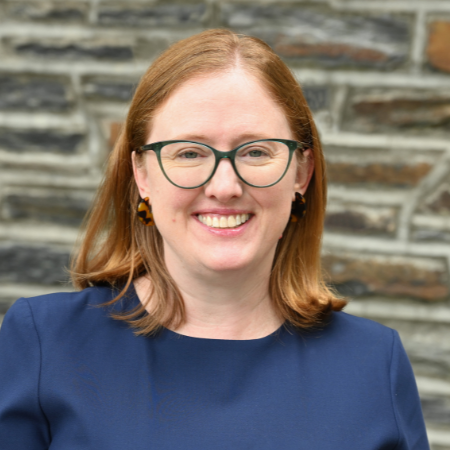
Lauren Ginsberg is associate professor of classical studies and theater studies.