Image
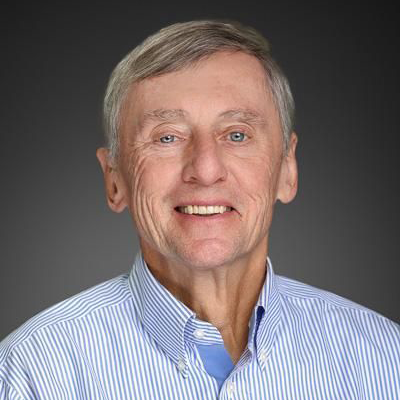
What does it mean to be emeriti faculty? Many professors who are considering retirement are curious about this question but can’t always find role models and mentors to help them see what’s possible.
Professor Emeritus of Biology Steve Nowicki, who took this step earlier this year, moderated a conversation in which four colleagues shared how they’re bridging the transition to emeriti status.
“I’m a relatively recent emeritus professor. I’ve been told that your perspective … will change dramatically in ways you don’t understand in the first one to two years. You should think of the first couple of years as one thing and then the rest of your life as another.” –John Aldrich, Pfizer, Inc./Edmund T. Pratt, Jr. University Distinguished Professor Emeritus of Political Science
“I’ll be teaching my last class this spring. … If you have a particular calling to teach, there are ways that you can [continue to] do that, because you still have so much to offer. Graduate mentoring is so vital. You can also teach courses in your department, the graduate liberal studies program and the Duke prison education program. … A book that was really helpful to me is called ‘Transitions: Making Sense of Life’s Changes.’” –Thomas Robisheaux, Professor of History
“I’ve opted for a step-down process [toward emeriti status]. … I’ve shifted my attention to mentoring my former Ph.D.s who are trying to get tenure or promoted to full. I’ve found that to be a fairly useful substitute for the day-to-day mentoring. … I was always a professor because I wanted to be a student all my life, so I’ve sat in on a couple of classes. They’ve been wonderful.” –Lynn Smith-Lovin, Robert L. Wilson Distinguished Professor of Sociology
“Social interactions are critical, and I’ve realized the importance of routine. I’m now in two different book clubs and learning to play bridge, which is very intellectually stimulating. It’s great advice to take a trip right after you retire, so you’ll have something to look forward to. … I recommend working with a financial advisor.” –Sue Jinks-Robertson, James B. Duke Distinguished Professor Emerita of Molecular Genetics and Microbiology
“Beyond the perks [of emeriti status] like free parking or library privileges or keeping your e-mail, our interest here is another layer of opportunity and connectivity. We want to go beyond those kinds of tangible things [and into] opportunities for connectivity, opportunities for reciprocity and the life of the mind. … What are the higher levels of connectivity that could be desirable?” –Steve Nowicki, Professor Emeritus of Biology